Table of Contents
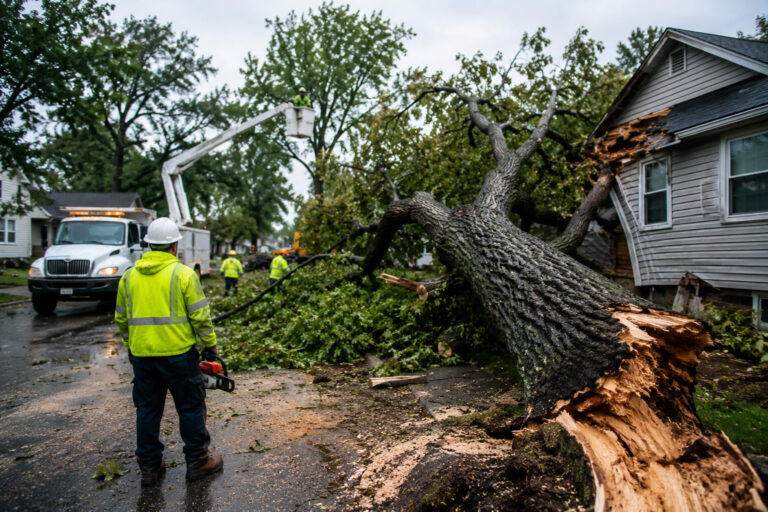
It usually happens fast. A gust of wind, a wet snow load, or a weakened trunk gives way, and suddenly a tree is across your driveway, resting on your roof, or tangled in a power line. The sound alone can be alarming, and the hours that follow can feel confusing. Knowing the right steps, and the right order, makes a real difference. This guide explains what property owners should do in the first hours and how Emergency Tree Removal Buffalo NY crews approach a situation like this.
At Greenway Tree Service, we have seen how calm decisions on the first night protect people, homes, and insurance claims. Use the sections below as a practical reference you can come back to whenever storm season arrives.
First Priority: Keep Everyone Safe
Before you think about the tree, think about people. A fallen tree can hide dangers that are easy to miss in the dark.
- Move everyone away from the tree, the damaged area, and any sagging roof sections
- Check on family members and neighbors, and call 911 if anyone is hurt
- Stay far away from any wire touching the tree, the ground, or your home
- Do not walk under leaning trees or hanging limbs
- Keep children and pets inside and away from windows near the damage
- If you smell gas or hear hissing, leave the building and call your gas utility from outside
Property can be repaired. People cannot be replaced, so nothing else should come before safety.
What to Do the Night a Tree Falls
Once everyone is safe, work through these steps in order. They help you stay organized when stress is high.
- Look from a safe distance and note whether the tree is on a structure, a vehicle, a road, or a line
- Call your utility company if any wire is down, sparking, or tangled in branches
- Take photos and short videos of the damage from several angles before anything is moved
- Block off the danger area with cones, rope, or tape so no one walks into it
- Contact an insured crew that offers urgent tree work and describe what you see
- Notify your insurance provider and ask what documents they need
- Cover openings in your roof or walls only if you can do so safely from the ground
Do not try to cut or pull the tree yourself. Fallen trees often hold hidden tension, and a single cut can cause a limb to snap back or the whole trunk to shift.
Quick Reference Table for Common Situations
| Situation | Risk Level | What to Do Tonight |
|---|---|---|
| Tree on the roof or house | Very high | Leave the area if the structure looks unsafe, call for urgent help |
| Tree touching power lines | Very high | Stay far away, call the utility, then call a crew |
| Tree blocking the driveway or road | Medium to high | Mark the area, call for urgent removal, do not drive around it |
| Tree on a fence or shed | Medium | Photograph, keep clear, schedule prompt removal |
| Large broken limb still hanging | High | Keep people away, request an urgent inspection |
| Fallen branches in the yard only | Low | Wait for daylight, schedule normal cleanup |
The table shows why each situation needs a different response. A trained crew can quickly tell the difference between a true hazard and a problem that can wait until morning.
What Counts as an Emergency
Not every storm-damaged tree demands a midnight response. Emergency Tree Removal is appropriate when a tree is on or leaning toward a building, trapping a vehicle, blocking an exit, touching lines, or threatening to fall on people. In those cases, speed matters because the danger can grow with wind, rain, or the weight of snow.
Situations that are damaged but stable, such as a cracked limb over an empty yard, can often be handled the next day. If you are unsure which category applies, describe the situation to a professional and ask for guidance. A trustworthy company will give you an honest answer rather than pushing every call as urgent.
Dealing with Utility Lines
Power lines are the most dangerous part of many tree falls. A tree touching a line can energize the trunk, the ground nearby, and even a fence or vehicle. Always assume a line is live.
- Stay at least several car lengths away from the tree and the wire
- Do not touch anything that is in contact with the tree
- Warn others to keep away until the utility confirms the line is safe
- Wait for utility crews to handle the line before tree work begins near it
Tree crews are trained to work around lines, but only after the utility has made the area safe.
What a Crew Does When They Arrive
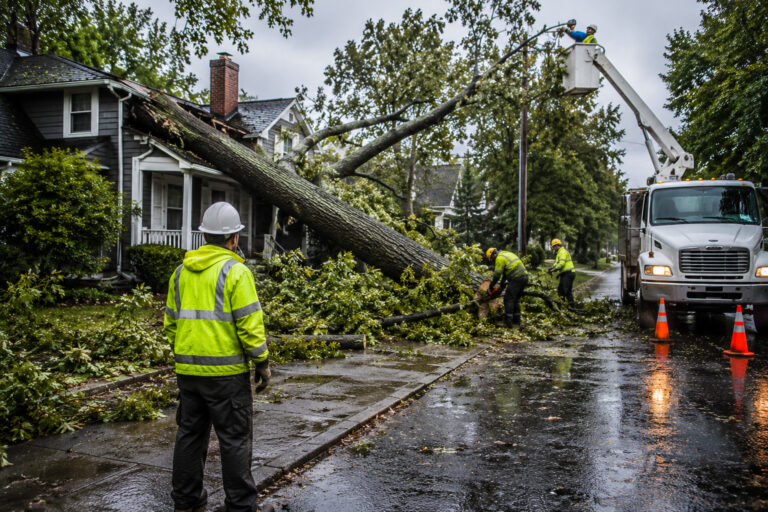
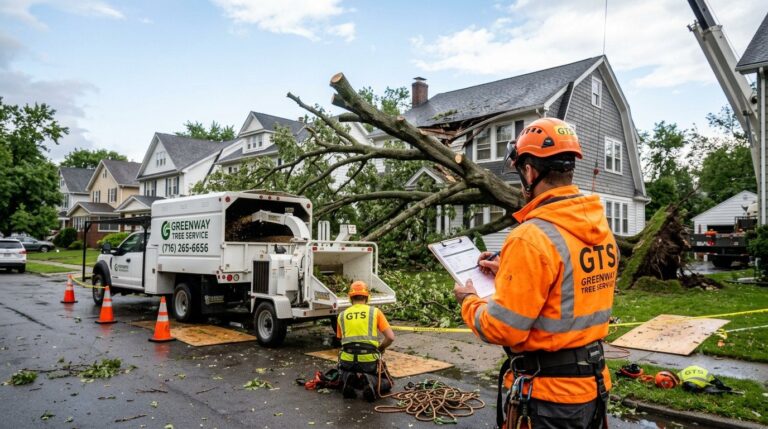
When an Emergency Tree Removal Service arrives, the first job is assessment, not cutting. The crew lead studies how the tree is resting, where the weight sits, and what could move when pieces are cut. They check for tension in the trunk and branches, identify the path of any lines, and plan where each section will go.
Then the work begins. Climbers or bucket trucks may be used to take pieces from the top, while ground crew members control ropes and move debris. Large sections might be lowered with rigging or lifted with a crane. The aim is to stabilize the situation first, protect the structure, and then finish the removal and cleanup safely.
Why DIY Cleanup Is Risky
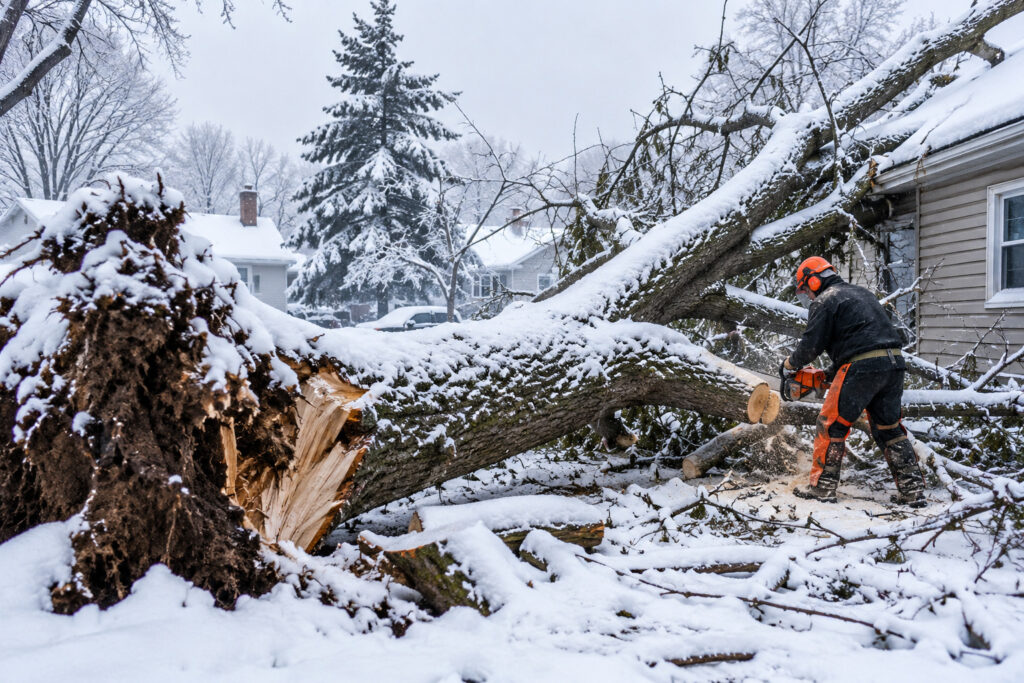
Many people want to act right away, especially if the tree is in a driveway or yard. A chainsaw may seem like a simple answer, but storm damage is unpredictable. Wet or frozen wood is slippery, branches can be loaded like springs, and nighttime lighting makes mistakes more likely.
Professional crews rely on training, protective gear, rigging systems, and teamwork. Their equipment is designed for exactly these conditions. Handing the job to experts costs money, but it often costs far less than an injury or a secondary accident.
How to Choose a Reliable Provider Under Pressure
After a storm, you may be tempted to accept the first offer you hear. Take a moment to check the basics, even if you only have a few minutes.
- Proof of liability insurance and workers’ compensation coverage
- Clear explanation of the plan, price range, and what is included
- Experienced climbers and proper rigging equipment
- Local address, phone number, and verifiable reviews
- No pressure to pay the full amount before work begins
A dependable Emergency Tree Removal company will answer these questions without hesitation. Be careful with anyone who knocks on your door unannounced, quotes a very different price from everyone else, or cannot show documentation. A reputable Emergency Tree Removal Service will also give you a written estimate once the situation is stable.
Insurance and Documentation
Coverage for fallen trees depends on your policy and on what the tree hit. Some policies address damage to homes and other covered structures, while a tree that falls without causing damage may be treated differently. Read your policy or call your agent as soon as it is safe to do so.
Photos, videos, written estimates, and invoices all help support a claim. Keep every receipt for tarping, temporary repairs, and debris removal. An Emergency Tree Removal Service can usually provide a clear scope of work that helps with your paperwork.
After the Emergency: Follow-Up Steps
Once the tree is off your property and the area is safe, there are still a few important items to finish. Ask the crew to check the remaining trees for cracks or leaning, since storms often weaken more than one tree. Consider scheduling an inspection with a company that handles Tree removal buffalo NY projects so that other high-risk trees are addressed before the next storm.
You may also want to arrange stump grinding, repair damaged turf, and replant. Choosing the right species and location can reduce storm risk in the future.
What Affects the Cost
Urgent work is usually priced differently from planned work because of the equipment, crew availability, and risk involved. The main factors include tree size, location, access, proximity to structures or lines, and whether a crane is needed. Emergency Tree Removal costs also reflect after-hours scheduling and the level of danger.
Always ask what the estimate includes. Cleanup, hauling, and stump work can change the total. A written quote helps you compare options and gives your insurance company a clear record of the work.
Frequently Asked Questions
Who should I call first when a tree falls?
If anyone is hurt or a structure is in danger, call 911. If wires are involved, call the utility company. Then contact a professional crew that handles Emergency Tree Removal Buffalo NY situations.
Is it safe to stay in my house if a tree hit the roof?
Only if a professional or emergency responder confirms the structure is stable. If you hear cracking, see sagging, or smell gas, leave right away.
How quickly can a crew respond?
Response times vary depending on storm severity and demand. Describe your situation clearly so the dispatcher can prioritize life-safety hazards. An Emergency Tree Removal Service will typically ask about lines, structures, and access.
Will insurance cover the removal?
It depends on your policy and the damage involved. Contact your insurer early and ask what documentation is required.
Can I remove a small fallen branch myself?
Small branches lying on the ground and away from lines can often be moved by hand. For anything large, tangled, or near a structure, call a professional.
Should I look into other trees on my property?
Yes. A storm that brings down one tree may have weakened others. Searching for Tree removal buffalo NY inspection options after a storm can help you catch problems early.
Final Thoughts
The night a tree falls is stressful, but a clear plan makes it manageable. Protect people first, keep away from lines, document the damage, and call an insured crew with the right equipment. Afterward, follow up with inspections and preventive care so the next storm finds your property in better shape.
If you ever need Emergency Tree Removal Buffalo NY support, choose a company that explains its plan, shows proof of insurance, and puts safety ahead of speed. Greenway Tree Service is ready to help property owners handle urgent situations and plan long-term tree care. Contact us to learn more about Tree removal buffalo NY options and how to prepare before the next storm.

Ashwin Kumar
Our team of certified arborists has served the Buffalo metropolitan area for over 15 years, specializing in safe tree removal, storm response, and tree health consultation.
Need a Tree Service Estimate in Buffalo?
ISA-certified arborists. Free estimates. 24/7 emergency response across Western NY.